-
Glas gesmolten met stalen tanks (596)
-
roestvrij staaltanks (434)
-
De fusie plakte Epoxytanks (592)
-
Gegalvaniseerde stalen tanks (321)
-
De Daken van de aluminiumkoepel (1316)
-
Opbergtanks voor afvalwater (231)
-
gelaste stalen tanks (457)
-
Drukvaten (295)
-
Anaërobe Autoclaaf (201)
-
Industriële Watertanks (349)
-
Gelaagde stalen tanks (180)
-
Vastgeboute Staaltanks (390)
-
De Tank van de modderopslag (115)
-
De Tank van de biogasopslag (173)
-
Leachatopslagtanks (133)
-
Landbouwwateropslagtanks (179)
-
Brandwatertank (166)
-
Graanopslagplaatsen (146)
-
Biogas projecten (425)
-
Waterzuiveringsinstallatieprojecten (788)
-
Doppel membraan dak (223)

|
FBE-regulatietanks: de technische norm voor hydraulische stabiliteit van 2026
| Plaats van herkomst: | China |
| Merknaam: | CEC TANKS |
| Certificering: | ISO 9001:2008, AWWA D103 , OSHA , BSCI |
| Modelnummer: | W201691123005 |
| Min. bestelaantal: | 1SET |
| Prijs: | $5000~$20000 one set |
| Verpakking Details: | PE poly-foam tussen elke twee stalen platen; houten pallet en houten doos |
| Levertijd: | 0-60 dagen nadat de storting is ontvangen |
| Betalingscondities: | L/C, T/T |
| Levering vermogen: | 60 sets per maand |
|
Detailinformatie |
|||
| Plaats van herkomst | China | Merknaam | CEC TANKS |
|---|---|---|---|
| Certificering | ISO 9001:2008, AWWA D103 , OSHA , BSCI | Modelnummer | W201691123005 |
| Dikte van stalen platen: | 3 mm tot 12 mm, afhankelijk van de tankstructuur | Corrosie-integriteit: | Uitstekend |
| Chemische weerstand: | Uitstekend | Capaciteit: | 20 m3 tot 18.000 m3 |
| Levensduur: | ≥30 jaar | Permeabiliteit: | Gas / vloeistof ondoordringbaar |
| Markeren: | FBE-regulatie-tanks 2026 standaard,fusion bonded epoxy hydraulische tanks,FBE-tanks hydraulische stabiliteit garantie |
||
Productbeschrijving
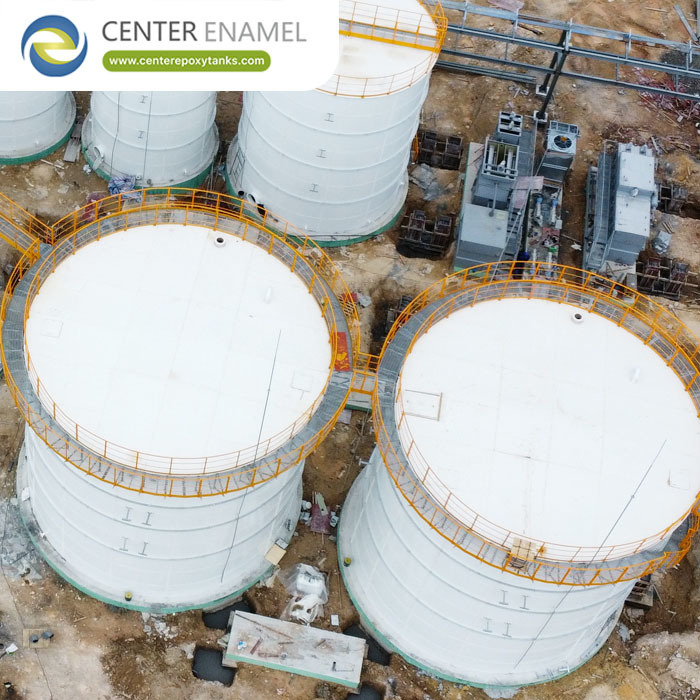
FBE-regeltanks: de technische norm van 2026 voor hydraulische stabiliteit
In het verfijnde landschap van industriële afvalwaterzuivering en gemeentelijk waterbeheer is deRegeltank(ook bekend als debietregeling of balanceringstank) fungeert als de "longen" van het systeem. Vanaf 2026Fusion Bonded Epoxy (FBE) geschroefde stalen tankszijn de definitieve keuze geworden voor regelgevingsinfrastructuur en bieden een strategische combinatie van chemische veerkracht, modulaire schaalbaarheid en snelle implementatie.
1. Wat is een FBE-regeltank?
Een FBE-regeltank is een modulair opslagvat dat is ontworpen om de waterstroom te regelen en de hydraulische belastingen te stabiliseren voordat deze in stroomafwaartse behandelingsprocessen terechtkomen. De "FBE" verwijst naar deFusion-gebonden epoxycoating – een hoogwaardig thermohardend polymeerpoeder dat elektrostatisch wordt aangebracht en thermisch wordt gesmolten op stalen panelen bij temperaturen hoger dan200°C.
Dit proces creëert een moleculair verknoopte barrière die permanent aan het stalen substraat is gebonden. Voor regeltoepassingen resulteert dit in een niet-poreuze bekleding met hoge dichtheid die bestand is tegen de onvoorspelbare chemische "slakkenbelastingen" en constante schommelingen in het waterniveau die inherent zijn aan debietregeling.
2. De cruciale functie van stroomregulering
Een regeltank is ontworpen om gevoelige stroomafwaartse biologische reactoren (zoalsCSTR,UASB, ofMBRsystemen) tegen hydraulische schokken. FBE-technologie verbetert deze functie door:
-
Hydraulisch balanceren:Het dempen van de impact van piekstroomperioden om een constante, gecontroleerde afvoersnelheid te garanderen.
-
Concentratie Homogenisatie:Het mogelijk maken van het mengen van verschillende influentconcentraties om een uniforme organische belasting van de zuiveringsinstallatie te verkrijgen.
-
pH- en temperatuurbuffering:Biedt een volume voor natuurlijke neutralisatie en thermische stabilisatie.
3. Technische prestaties: waarom projecten in 2026 standaardiseren op FBE
Moderne facility managers stellen prioriteitenTotale eigendomskosten (TCO)en levensduur van activa. FBE-technologie biedt duidelijke voordelen ten opzichte van traditioneel beton of geverfd staal.
4. Belangrijkste voordelen van FBE in regelgevingsomgevingen
Zero-discontinuïteit kwaliteitsborging
Regeltanks zijn onderworpen aan frequente "afzuigcycli", waarbij de binnenmuren worden blootgesteld aan zuurstof en vocht uit de lucht. FBE-panelen ondergaan hoogspanningVakantietesten (≥1100V)in de fabriek. Deze elektronische scan zorgt ervoor dat de coating 100% vrij van gaatjes is, waardoor de plaatselijke corrosie wordt voorkomen die vaak in het veld geverfde tanks teistert.
Superieure "Edge Wrap"-bescherming
In tegenstelling tot vloeibare coatings die tijdens het drogen van scherpe randen loskomen, zorgt het FBE thermische smeltproces voor een uniforme laagdikte, zelfs op paneelranden en boutgaten. Dit is van cruciaal belang voor regeltanks waar de "nat-droog"-interface voortdurend in beweging is.
Snelle modulaire implementatie
Door gebruik te maken van een top-down montagemethode met gesynchroniseerde hydraulische vijzels kunnen FBE-regeltanks in bedrijf worden gesteld30% tot 50% minder tijddan traditionele alternatieven, waardoor de arbeidskosten ter plaatse en de stilstand van de fabriek aanzienlijk worden verminderd.
5. Technische normen en naleving
Om de structurele integriteit op de lange termijn te garanderen, zijn FBE-regelgevingstanks van marktleiders zoalsCentrumglazuur (Shijiazhuang Zhengzhong-technologie)houd u aan de volgende codes:
-
AWWA D103-19:De wereldwijde maatstaf voor in de fabriek gecoate, vastgeschroefde koolstofstalen tanks.
-
ISO28765:2016:Specifiek voor hoogwaardige coatings voor industriële waterbehandeling.
-
ASCE 7-22:Structurele ontwerpvereisten voor seismische veerkracht en windbelastingen tot250 km/u.
-
NSF/ANSI 61:Essentieel als de regeltank wordt gebruikt in drinkwaterdistributiesystemen.
6. Strategische toepassingen in 2026
FBE-regeltanks vormen de ruggengraat van het hydraulisch beheer in meerdere sectoren:
-
Gemeentelijke rioolwaterzuiveringsinstallaties:Het reguleren van de influentstroom tijdens stormgebeurtenissen om bypass van installaties te voorkomen.
-
Industrieel afvalwater balanceren:Stabiliseren van afvalstromen uit de productie van voedingsmiddelen en dranken, textiel en chemicaliën.
-
Percolaatbeheer:Beheer van de vluchtige en corrosieve afvoer van gemeentelijke stortplaatsen.
-
Landbouw & Biogas:Het in evenwicht brengen van de mest- en organische afvalstroom vóór anaerobe vergisting.
Voor fabrieksingenieurs en ontwikkelaars die hun waterbeheersystemen toekomstbestendig willen maken, is deFBE-regeltankis de definitieve keuze voor 2026. Door de structurele betrouwbaarheid van geschroefd staal te combineren met de chemische immuniteit van fusion-bonded epoxy, zorgen deze tanks ervoor dat uw behandelingsproces stabiel, conform en kostenefficiënt blijft voor een ontwerplevensduur van meer dan30 jaar.
Evalueert u een regeloplossing voor een specifieke industriële workflow en wilt u een technisch voorstel voor de door u vereiste volume- en flowparameters?