-
Glas gesmolten met stalen tanks (596)
-
roestvrij staaltanks (434)
-
De fusie plakte Epoxytanks (592)
-
Gegalvaniseerde stalen tanks (321)
-
De Daken van de aluminiumkoepel (1316)
-
Opbergtanks voor afvalwater (231)
-
gelaste stalen tanks (457)
-
Drukvaten (295)
-
Anaërobe Autoclaaf (201)
-
Industriële Watertanks (349)
-
Gelaagde stalen tanks (180)
-
Vastgeboute Staaltanks (390)
-
De Tank van de modderopslag (115)
-
De Tank van de biogasopslag (173)
-
Leachatopslagtanks (133)
-
Landbouwwateropslagtanks (179)
-
Brandwatertank (166)
-
Graanopslagplaatsen (146)
-
Biogas projecten (425)
-
Waterzuiveringsinstallatieprojecten (788)
-
Doppel membraan dak (223)

|
Verwerking van pluimveeafval: geavanceerde biogasoplossingen en veerkrachtige GFS-tanks in de Filipijnen
| Plaats van herkomst: | China |
| Merknaam: | CEC TANKS |
| Certificering: | ISO 9001:2008, AWWA D103 , OSHA , BSCI |
| Modelnummer: | W |
| Min. bestelaantal: | 1SET |
| Prijs: | $5000~$20000 one set |
| Verpakking Details: | PE-polyschuim tussen twee stalen platen; houten pallet en houten |
| Levertijd: | 10-30 dagen na ontvangst van de aanbetaling |
| Betalingscondities: | L/C, T/T |
| Levering vermogen: | 60 sets per maand |
|
Detailinformatie |
|||
| Plaats van herkomst | China | Merknaam | CEC TANKS |
|---|---|---|---|
| Certificering | ISO 9001:2008, AWWA D103 , OSHA , BSCI | Modelnummer | W |
| Kleur tankcarrosserie: | Donkergroen / kan worden aangepast | Corrosie-integriteit: | Uitstekend |
| Dikte van stalen platen: | 3 mm tot 12 mm, afhankelijk van de tankstructuur | Chemische weerstand: | Uitstekend |
| Grootte van paneel: | 2,4M * 1,2M | Gemakkelijk schoon te maken: | Glad, glanzend, inert, anti-adhesie |
| Markeren: | Biogasoplossingen van pluimveeafval,GFS-tanks voor afvalwater,Biogas afvalwaterzuivering Filipijnen |
||
Productbeschrijving
Verwerking van pluimveeafval: geavanceerde biogasoplossingen en veerkrachtige GFS-tanks in de Filipijnen
Aangezien de Filippijnen een snelle uitbreiding van hun vee- en pluimveesector ervaren om een groeiende bevolking te ondersteunen,de industrie wordt geconfronteerd met de kritieke uitdaging om de daaruit voortvloeiende ecologische voetafdruk te beherenVoor moderne pluimveehouderijen in de hele archipel, die overgaan van traditionele afvalverwijdering naar geavanceerde afvalverwijderingBiogasoplossingenHet is niet langer alleen een optie, maar een strategische noodzaak.UASB (Upflow Anaerobic Sludge Blanket)met duurzaamheidGlas-staal (GFS) -tanks, zijn de exploitanten van de landbouwbedrijven erin geslaagd gevaarlijke kippenmest om te zetten in een waardevolle energiebron.
Het landschap van de pluimveesector in de Filippijnen en de problemen met afvalstoffen
De pluimvee-industrie in de Filippijnen wordt gekenmerkt door een aanzienlijke verschuiving naar grootschalige,geconcentreerde diervoederoperaties (CAFO's) om de voedselzekerheid te verbeteren en aan de exportnormen te voldoenDeze industrialisatie genereert echter een enorme hoeveelheid "hoge sterkte" organisch afval.
kippenmestIn het tropische en vochtige klimaat van de Filippijnen vormen onbehandelde afvalstoffen ernstige risico's:
Verontreiniging van het grondwater: Uitloging van nitraten en schadelijke ziekteverwekkers in de lokale grondwateren.
Luchtverontreiniging: aanzienlijke uitstoot van methaan en ammoniak, die leiden tot intense geuren en bijdragen aan broeikasgassen.
Schade aan het ecosysteem: Voedingsrijke afvoer naar lokale waterwegen en kustgebieden, wat leidt tot eutrofisering en vernietiging van waterhabitats.
Om deze bedreigingen te bestrijden,Filipijnse regeringheeft een strengerebeleid inzake afvalwaterzuiveringDeze verplichtingen vereisen dat landbouwprojecten gestandaardiseerde behandelingsprocessen toepassen om de natuurlijke hulpbronnen van het land te beschermen.bevordering van een circulaire economie waarbij afval wordt gerecycled tot hernieuwbare energie.
Van pluimveeafval naar hernieuwbare energie: het biogasproces
De omzetting van kippenmest in biogas omvat een geavanceerde biologische sequentie die is ontworpen voor maximale hulpbronwinning:
Verzameling en voorbehandeling: Ruwe pluimveeafval en reinigingswater worden verzameld in een put, waarVloeistof-vaststofseparatorenen mechanische schermen verwijderen veren, stenen en anorganisch zand.
Anaërobe spijsvertering: De bereide spuit wordt in eenAnaërobe reactorIn deze zuurstofvrije omgeving breken gespecialiseerde micro-organismen de organische stoffen af, waardoor ermethaan ($CH_4$).
Gasopslag en zuivering: Het ruwe gas wordt gevangen inBiogashouder met dubbel membraanen dan ging door eenOntzwavelingssysteemHet systeem is in staat om het corrosieve waterstofsulfide ($H_2S$) te verwijderen, waardoor het hele systeem beschermd wordt.
Energieherstel: Het gezuiverde biogas wordt in eenCHP (combined heat and power)een eenheid of een generator voor de productie van elektriciteit en warmte ter plaatse voor de exploitatie van het bedrijf, waardoor de energiekosten aanzienlijk worden verlaagd.
Precisie-techniek: het juiste anaërobe proces kiezen
Center Enamel ontwerpt en bouwt op maat gemaakte reactorsystemen die zijn afgestemd op de specifieke kenmerken van afvalwater van pluimveehouderijen:
UASB (Upflow Anaerobic Sludge Blanket): Deze methode is zeer effectief voor afvalwater in vloeibare fase en maakt gebruik van een dichte, korrelige slibdek om een superieure behandelingsefficiëntie binnen een compacte afdruk te bereiken.
CSTR (Completely Stirred Tank Reactor): De voornaamste keuze voor mest met een hoge concentratie vaste stoffen, waarbij mechanische menging wordt gebruikt om een homogene omgeving te behouden en de gasopbrengst te maximaliseren.
USR (Upflow Solids Reactor): Speciaal ontworpen voor afval met een hoog gehalte aan vaste stoffen in suspensie, waardoor lange retentietijden worden gewaarborgd voor de grondige afbraak van complexe organische vezels.
IC (Intern Circulatie) reactor: Een hoogwaardig systeem dat gebruikmaakt van een interne gascirculatie om een superieure vermenging te bereiken en een hoge hoeveelheid organische stoffen te verwerken, ideaal voor grootschalige industriële afvalstoffen.
Het GFS-tankvoordeel: duurzame infrastructuur
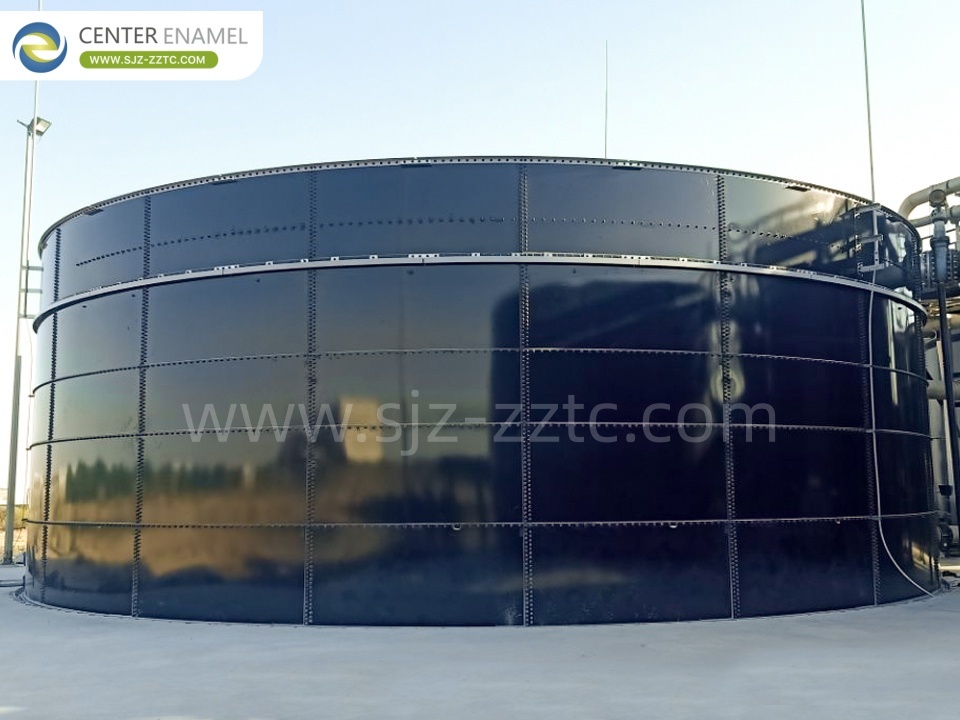
Voor deze geavanceerde biologische processen is de keuze van opslag- en reactorvat van cruciaal belang.Glas-staal (GFS) -tankszijn uitgegroeid tot de benchmark van de sector vanwege een aantal belangrijke voordelen:
Ongeëvenaarde corrosiebestendigheid: De glazen bekleding is inert en niet-poreus, waardoor zij immuun is voor de agressieve organische zuren en H2S die ontstaan bij de vertering van stikstofrijk pluimveeafval.
Modulaire en snelle installatie: GFS-tanks worden ter plaatse aan elkaar geblokkeerd, wat een veel snellere inzet in afgelegen gebieden mogelijk maakt in vergelijking met traditionele betonnen constructies.
Thermische stabiliteit: Deze tanks zijn gemakkelijk te isoleren om de stabiele mesofiele of thermofiele temperaturen te behouden die nodig zijn voor een optimale microbiële activiteit.
Lange levensduur: Ze zijn ontworpen om meer dan 30 jaar te duren met minimaal onderhoud en bieden een zeer economische oplossing op lange termijn.
Centrum Emaille: Expertise in uitgebreide biogasprojecten
Center Enamel is erkend als een wereldleider in het ontwerp en de uitvoering van grootschaligeBiogas projectenMet decennia ervaring is het bedrijf gespecialiseerd in het beheer van complexe afvalstromen die een efficiënte anaërobe vertering en een aanzienlijke vermindering van de organische belasting vereisen.Het belangrijkste voordeel van Center Enamel ligt in het leveren vanEPC-oplossingen (Engineering, Inkoop en Constructie)¢de eerste fase van het procesontwerp en de vervaardiging van op maat gemaakte apparatuur tot de installatie en inbedrijfstelling ter plaatse.Deze alomvattende aanpak zorgt ervoor dat pluimveehouders en industriële exploitanten 100% milieuvriendelijkheid bereiken en tegelijkertijd de terugwinning van hernieuwbare energie uit hun afvalstoffen maximaliseren.
Wereldwijde succesverhalen: bewezen projecten
Geval 1: Biogasproject Maleisië
Tank afmetingen: φ22,93 × 12,325 m (H) 1 eenheid
Totaal volume: 5.087 m3 1 Eenheid
Jaar van voltooiing: 2025
Geval 2: Canada Biogas Project
Tank afmetingen: φ8,4 × 7,2 m (H) 2 Eenheden
Totaal volume: 798 m3
Voltooid jaar: 2024
Voor pluimveehouders in de Filippijnen is de overgang naar duurzameBiogasoplossingenHet is de meest effectieve manier om de winstgevendheid in evenwicht te brengen met de verantwoordelijkheid voor het milieu.GFS-tanksen de efficiëntie vanUASBofCSTRHet Centrum Enamel biedt de uitgebreide infrastructuur die nodig is om afvalverplichtingen om te zetten in hernieuwbare energie.Deze geïntegreerde aanpak zorgt voor de naleving op lange termijn van de veranderende Filippijnse milieunormen, terwijl de lokale pluimvee-industrie naar een groenere, zelfvoorzienende toekomst.